

Stranger Things Ending Explained: how the series concludes
The final episode, “The Rightside Up,” serves as the dramatic conclusion to one of Netflix’s most influential series. Stranger Things closes with a story about sacrifice, friendship and the end of childhood, while giving its characters a definitive confrontation against Vecna.
The finale brings together the emotional arcs and supernatural threads that defined the show since its debut.
The final battle against Vecna
Vecna’s plan reaches its peak in the last episode: merging the real world with the Upside Down by using children as psychic amplifiers. Through trauma and manipulation, he channels massive power to stabilize the dimensional breach.
Eleven fights him inside his mind while the rest of the team battles external threats. Their combined effort finally destabilizes Vecna enough to collapse his plan.
Eleven’s ambiguous fate
In a decisive act, Eleven remains in the center of the dimensional collapse, triggering the destruction of the Upside Down. The explosion suggests she may have died.
However, the finale deliberately introduces ambiguity:
- Her body is never shown.
- Her disappearance mirrors previous psychic escapes.
- Mike recounts a theory that she may have survived by projecting an illusion.
The ending allows space for interpretation, reinforcing themes of sacrifice, transformation and emotional maturity.
The destruction of the Upside Down
The Upside Down is revealed not as a full alternate world, but a dimensional fracture sustained by exotic energy. Vecna intended to stabilize it permanently.
When the core is destroyed:
- Vecna loses his power
- The bridge collapses
- The Upside Down ceases to exist
- Reality is restored
This marks the true end of the threat that haunted Hawkins for years.
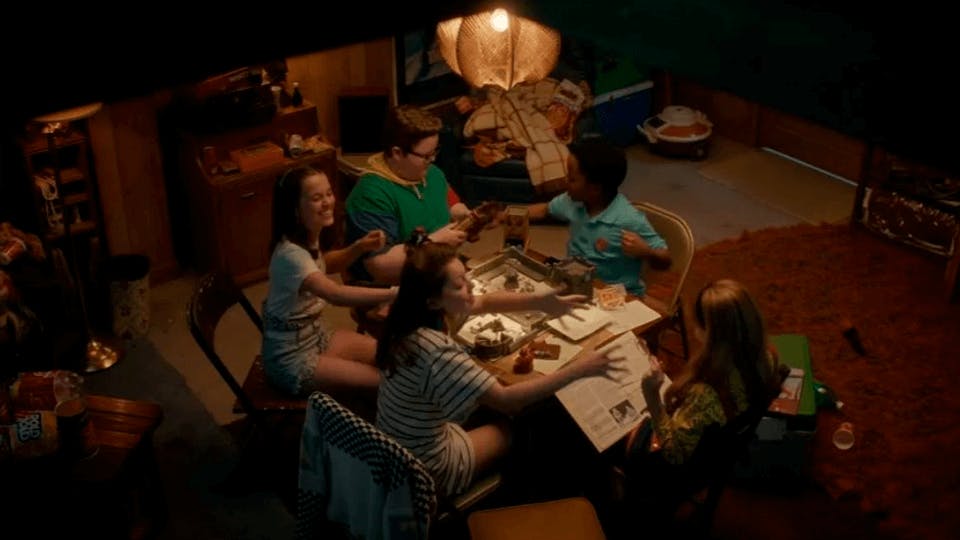
The epilogue: 18 months later
The finale shows the characters adapting to life after the catastrophe:
Mike
Holds onto the belief that Eleven is still alive.
Steve Harrington
Begins a stable new chapter as he embraces adulthood.
Will, Dustin, Lucas and others
Follow new paths but remain bonded by their shared past.
Joyce and Hopper
Finally find peace together after years of trauma.
The epilogue offers closure while emphasizing growth.
Themes: growth, loss and the end of childhood
Stranger Things ultimately tells a story about leaving behind what once protected us. Eleven’s disappearance symbolizes this transformation. The finale reflects on friendship, grief, identity and the painful but necessary process of becoming an adult.
An ending open to interpretation
By refusing to define Eleven’s fate, the show allows viewers to choose between tragedy and hope. This decision deepens the impact of the ending, making it more personal and universal.
Conclusion
Stranger Things concludes with a powerful mix of action, emotion and symbolic storytelling. The destruction of the Upside Down, the ambiguous fate of Eleven and the characters’ transition into adulthood combine to create a finale that is both heartbreaking and meaningful.